Regulatory pressure on dual-currency US sweepstakes casinos intensified again this month, with New York finalising a statewide ban and lawmakers in several other jurisdictions laying the groundwork for similar restrictions.
The moves continue a year-long pattern in which sweepstakes operators, once considered a legal workaround in markets without real-money online casinos, are facing some of the most substantial legislative pushback to date.
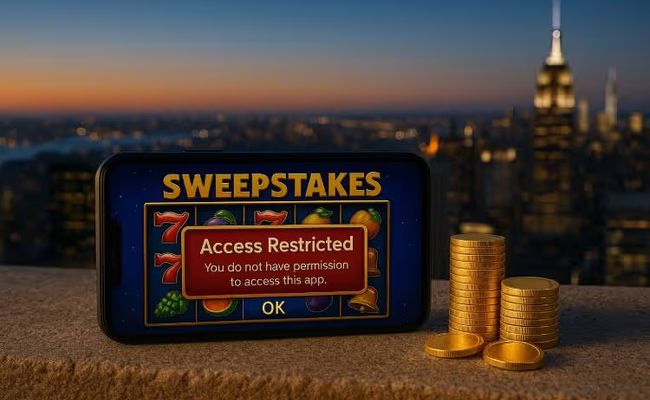
New York’s bill, signed by Governor Kathy Hochul, closes the door on operators that use dual-currency systems resembling casino gameplay. The signing formalises action taken earlier this year, when many platforms withdrew after receiving cease-and-desist notices from the state attorney general.
Studies estimate the Empire State generated more than $760 million in sweepstakes casino sales in 2024, making the ban a notable loss for operators that relied heavily on the market.
A Growing List of States Targeting Dual-Currency Models
New York’s move is part of a broader national trend. Legislatures in Florida, Indiana, and Maine introduced new bills this month seeking to outlaw sweepstakes casinos or redefine them under stricter gambling statutes.
In Florida, House Bill 591 is set to be reviewed in the 2026 legislative session. The proposal is extensive, positioning internet-based sweepstakes gambling as a felony and reinforcing the Seminole Tribe’s dominant position in the state’s gaming landscape. Florida represents a significant market for sweepstakes operators, with an estimated 2025 revenue of more than $1 billion, making any ban especially consequential.
Maine’s LD 2007 adopts a similarly direct approach, proposing penalties of up to $100,000 for operators that offer casino-style sweepstakes. The bill follows a consumer advisory issued earlier this year by the state’s Gambling Control Unit, which warned residents that these platforms operated as unregulated gambling platforms.
Indiana also entered the conversation with House Bill 1052, which defines dual-currency sweepstakes gaming in explicit terms and outlines both civil and criminal penalties. The proposal would apply only to platforms offering cash-redeemable prizes, excluding traditional promotional giveaways.
These efforts join a rapidly growing list of state-level actions. California, Connecticut, Montana, Nevada, and New Jersey have already passed bans. Louisiana, Mississippi, Maryland,
Pennsylvania, Arizona, Tennessee, and West Virginia have relied on cease-and-desist orders instead, effectively pushing many operators out without new legislation.
Operators Adjust Strategies as Pressure Mounts
The regulatory shift has had direct effects on major industry players. VGW, one of the largest sweepstakes operators, exited New York months before the ban took effect and has already withdrawn from Canada to concentrate on the U.S. market. Other brands staged orderly departures throughout the year, winding down gameplay and keeping redemption windows open for a limited period.
ClubWPT Gold, however, experienced one of the most abrupt transitions. As soon as New York’s bill became law, players in the state were locked out of their accounts and required to travel to neighbouring jurisdictions to redeem prizes. The company had attempted to reposition itself as a training-based platform by removing references to its dual-currency model, but the final legislation gave state regulators broad discretion to determine what qualifies as sweepstakes gaming. This left the operator unable to continue offering its product in New York despite the redesign.
California poses the next major test. Its own dual-currency ban comes into effect on January 1, 2026, and operators are already preparing for another round of exits or product changes. Some, including online poker platforms, are planning staged shutdowns similar to those seen earlier in the year. Others intend to maintain operations with modified platform structures, though it remains unclear how regulators will interpret these adjustments.
What This Means for the Wider Sweepstakes Casino Landscape
Although the sweepstakes model still operates legally in most U.S. states, the momentum in 2025 suggests a tougher environment ahead. Many bans and enforcement actions stem from concerns that these platforms mirror real-money casino gambling while operating outside established regulatory frameworks. The trend is particularly significant in states without regulated online casinos, where sweepstakes gaming has often filled a market gap.
Despite the growing restrictions, sweepstakes casinos continue to attract large player bases in states where they remain available. Until more jurisdictions regulate real-money online casinos, these platforms are likely to maintain strong demand. However, the steady rollout of bans in key markets indicates that 2026 could bring even greater challenges, especially as lawmakers refine definitions around what constitutes legal social gaming versus unlicensed gambling.

Reviews (0)
No comments yet. Be the first to comment!